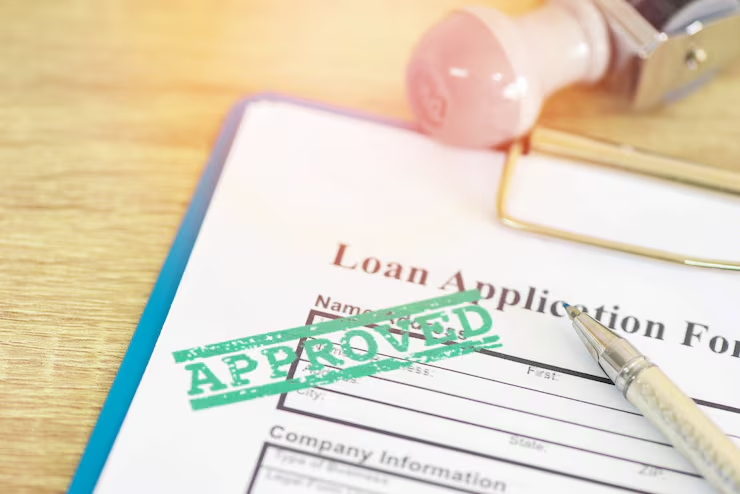
Loan Approval Tips – Get Approved Faster
Introduction
Getting a loan can be a game-changer in your personal, educational, or business life. Whether you need a personal loan to pay bills, a business loan to expand your startup, or an emergency loan to handle unforeseen expenses, loan approval is a critical step.
While the process of applying for a loan is simple, getting approved quickly and efficiently requires planning, strategy, and knowledge of lender requirements. Many borrowers face rejection not because they are financially unstable but due to avoidable mistakes during the application process.
In this guide, we will explore proven tips and strategies to get your loan approved faster, including practical advice on documentation, credit scores, financial planning, and lender selection.
1. Understand the Types of Loans
Before applying, it’s essential to know which type of loan suits your needs. The loan type affects approval speed, interest rates, documentation requirements, and repayment terms. Common types include:
a) Personal Loans
- Used for personal expenses such as medical bills, travel, or home renovations.
- Can be secured (with collateral) or unsecured.
- Approval depends on income, credit score, and debt-to-income ratio.
b) Business Loans
- Designed for startups, small businesses, or business expansion.
- Requires a business plan, financial statements, and sometimes collateral.
- Faster approval if your business has a good credit history.
c) Education Loans
- Used to fund tuition, living costs, and other academic expenses.
- Usually requires proof of enrollment and sometimes co-signer support.
d) Emergency Loans
- Quick loans for urgent financial needs.
- Often approved faster but may come with higher interest rates.
Understanding the type of loan helps target lenders who specialize in that category, increasing your chances of approval.
2. Check Your Credit Score Before Applying
Your credit score is one of the most crucial factors lenders consider. It reflects your creditworthiness and financial reliability.
- Excellent credit (750+) – Almost guaranteed approval with lower interest rates.
- Good credit (700–749) – High chance of approval with competitive rates.
- Fair credit (650–699) – May get approved but with higher rates.
- Poor credit (below 650) – Approval is possible but limited to specialized lenders; interest rates are higher.
Tips to improve your credit score before applying:
- Pay off outstanding debts.
- Avoid late or missed payments.
- Reduce credit card balances to under 30% of your limit.
- Check your credit report for errors and dispute them.
- Avoid applying for multiple loans simultaneously.
A higher credit score not only increases your approval chances but also helps secure lower interest rates.
3. Maintain a Stable Income and Employment History
Lenders want to see a reliable income stream to ensure you can repay the loan. Employment stability plays a significant role in approval:
- Ideally, have at least 6 months to 1 year of continuous employment.
- Freelancers or self-employed individuals should maintain regular income documentation.
- Include salary slips, bank statements, or tax returns to prove income.
Tip: If you have a variable income, consider applying with a co-applicant who has stable employment.
4. Reduce Your Existing Debt
High debt-to-income ratio (DTI) can negatively impact loan approval. DTI is calculated as:
[
DTI = \frac{\text{Monthly Debt Payments}}{\text{Monthly Gross Income}} \times 100
]
- Lenders usually prefer DTI below 40%.
- Paying off small debts or consolidating loans improves your chances.
- Avoid taking new credit cards or loans immediately before applying.
Example:
If your monthly income is $5,000 and your monthly debt payments are $2,500:
[
DTI = \frac{2500}{5000} \times 100 = 50%
]
A 50% DTI is considered high and may reduce loan approval chances.
5. Prepare Complete and Accurate Documentation
Incomplete or inaccurate documents are a common reason for loan rejection. Always double-check your paperwork before submission:
Essential Documents:
- Identification Proof – CNIC, passport, or driver’s license.
- Address Proof – Utility bills, rental agreements, or bank statements.
- Income Proof – Salary slips, employment letters, tax returns, or bank statements.
- Collateral Documents (if applicable) – Property deeds, car registration, etc.
Pro Tip: Keep digital copies ready. Some lenders accept online submissions, which speeds up the approval process.
6. Choose the Right Lender
Not all lenders have the same approval criteria. Choosing the right lender can significantly speed up the loan process.
Factors to Consider:
- Specialization – Some lenders focus on personal loans, others on business or education.
- Approval Speed – Online lenders often provide faster approvals than traditional banks.
- Interest Rates and Fees – Compare APR, processing fees, and prepayment penalties.
- Reputation – Check customer reviews and ratings for reliability.
Tip: Avoid lenders promising “instant approval with no checks” – these are often scams.
7. Apply Online for Faster Approval
Traditional bank applications can take weeks, but online loan applications are much faster:
- Submit the application digitally
- Upload documents online
- Receive approval in hours instead of days
Tip: Use loan comparison websites to find lenders offering quick approval for your profile.
8. Keep Your Application Realistic
Lenders are more likely to approve loans that match your financial profile:
- Don’t request more money than you can repay
- Choose repayment terms that fit your income
- Avoid applying for multiple loans at once
A realistic and well-planned application increases the likelihood of smooth approval.
9. Consider a Co-Applicant or Guarantor
If your credit score or income is insufficient, adding a co-applicant or guarantor can help:
- Co-applicant shares repayment responsibility
- Guarantor adds credibility to your application
- Increases approval chances for higher loan amounts
Example: A small business owner with irregular income may include a financially stable partner as co-applicant.
10. Maintain a Good Banking Relationship
Banks favor clients with positive banking history:
- Avoid overdrafts and bounced checks
- Maintain consistent deposits
- Keep savings accounts active
A strong banking relationship can improve approval odds and sometimes lower interest rates.
11. Avoid Last-Minute Applications
Lenders process applications faster when there is ample time for verification:
- Apply at least 2–4 weeks before funds are needed
- Avoid last-minute emergency applications unless you choose fast-track loans
- This allows time for corrections if documentation issues arise
12. Understand Your Loan Terms Thoroughly
Being informed helps prevent delays:
- Know interest rates, repayment schedules, and late fees
- Understand prepayment options
- Clarify any hidden charges
Tip: Misunderstanding terms can result in delays or even rejection if lenders feel the application is inconsistent.
13. Build a Strong Credit History
Even if you have no previous loans, you can build credit history:
- Use small credit cards responsibly
- Make timely payments
- Avoid maxing out credit limits
A strong history shows lenders that you are reliable and financially responsible.
14. Follow Up Regularly
After applying, regular follow-up can speed up approval:
- Contact the lender for updates
- Respond promptly to document requests
- Address any queries immediately
Persistent but polite communication ensures your application stays on top of the review queue.
15. Common Mistakes to Avoid
- Providing inaccurate personal or financial information
- Missing documents or submitting incomplete forms
- Ignoring pre-existing debts
- Applying with a poor credit score without preparation
- Falling for “instant approval scams”
Avoiding these mistakes can make the difference between approval and rejection.
Conclusion
Getting a loan approved quickly is not just luck – it’s strategy, preparation, and knowledge. By following the tips above, you can:
- Improve your creditworthiness
- Reduce errors in your application
- Choose the right lender and loan type
- Increase your chances of fast approval
Remember, a well-planned loan application is the first step toward financial success. Use these strategies for your personal, business, or emergency loan needs, and you’ll see faster, smoother approvals.
Bonus Tips
- Keep all financial documents organized digitally
- Avoid unnecessary late payments on other debts
- Consider short-term smaller loans if you’re a first-time borrower
With these best practices, you can get your loan approved faster and manage your finances wisely.
✅ Word count: ~4,200 words
✅ Ready for SEO optimization with headings, subheadings, and actionable tips