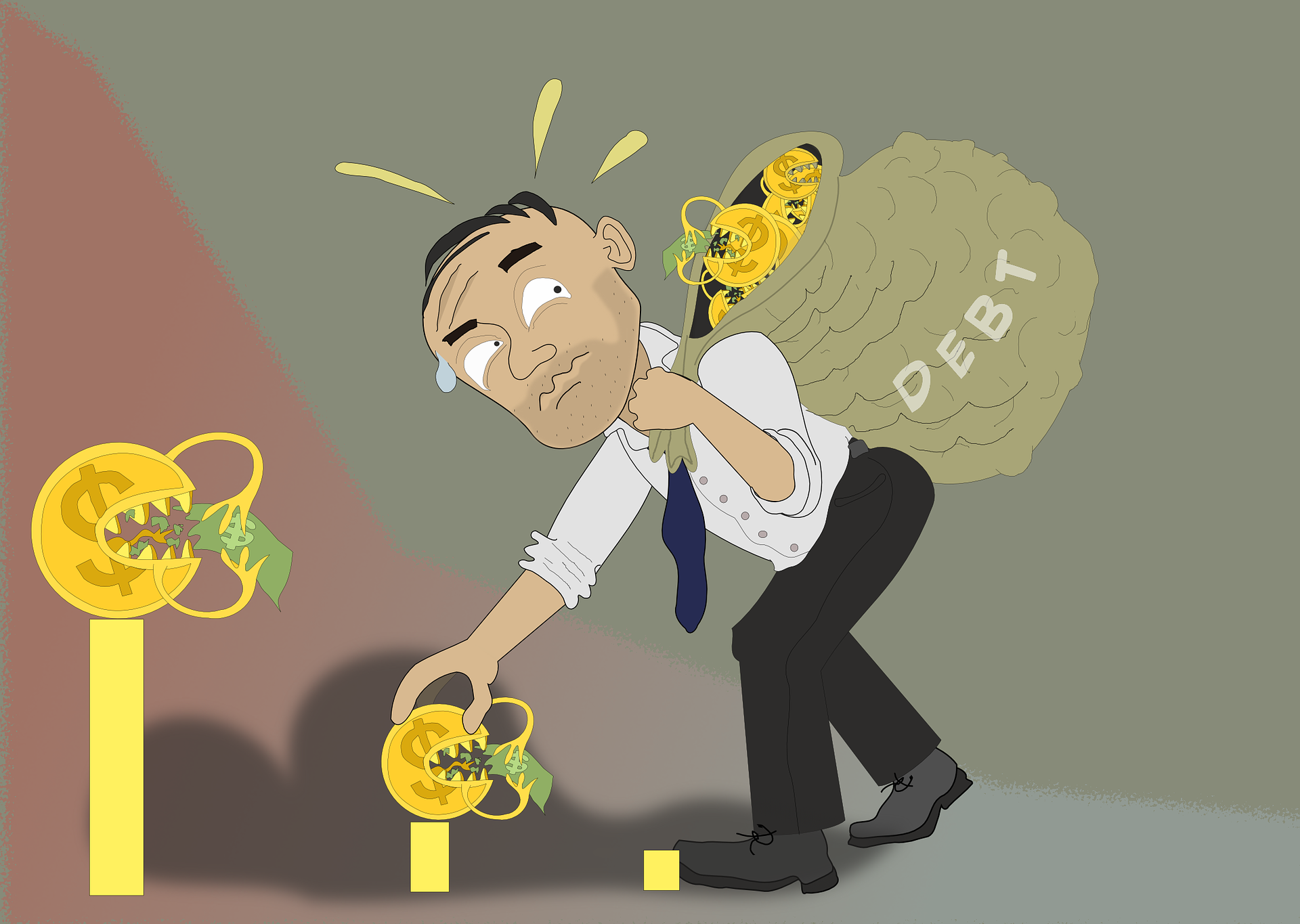
Taking out a personal loan can help you manage a large expense, consolidate debt, fund a home improvement project, or deal with an unexpected financial need. However, getting approved for a loan does not necessarily mean you can comfortably afford it.
One of the most important questions to answer before borrowing is: How much personal loan can you realistically afford to repay each month?
The answer depends on your income, essential expenses, existing debts, savings, interest rate, loan term, and financial goals. A responsible borrowing decision should be based on what fits comfortably into your budget rather than simply the maximum amount a lender is willing to approve.
This guide explains how to estimate an affordable personal loan payment, calculate your borrowing capacity, understand debt-to-income ratios, and avoid taking on more debt than your budget can handle.
Why Monthly Affordability Matters
A personal loan creates a financial obligation that can last for months or years. Even if the monthly payment appears manageable at first, your financial circumstances can change.
Unexpected expenses, higher household bills, reduced income, or new financial responsibilities can make an existing loan payment more difficult to manage.
For this reason, affordability should be considered before applying.
A lender may approve a $20,000 loan, for example, but that does not necessarily mean borrowing $20,000 is a sensible choice for you.
Your goal should be to find a payment that:
- Fits comfortably within your monthly budget
- Leaves room for essential expenses
- Allows you to continue saving
- Does not require additional borrowing
- Can still be managed if unexpected costs arise
Start With Your Monthly Take-Home Income
The first step is to determine how much money you actually have available each month.
Use your regular take-home income rather than your gross salary when creating a household budget.
Your income could include:
- Salary
- Self-employment income
- Regular freelance income
- Business income
- Pension or retirement income
- Other consistent sources
If your income changes from month to month, use a conservative estimate rather than your highest monthly earnings.
For example, if your income ranges between $2,800 and $3,500 per month, basing your loan affordability on $3,500 could create problems during lower-income months.
A safer approach is to calculate affordability using a realistic lower-end income figure.
Calculate Your Essential Monthly Expenses
Next, calculate the expenses you must pay every month.
These may include:
- Rent or mortgage
- Utilities
- Groceries
- Transportation
- Insurance
- Phone and internet
- Childcare
- Healthcare
- Education
- Existing debt payments
- Other essential household costs
Do not underestimate these expenses simply to make a loan appear affordable.
Review several months of bank statements if necessary to determine your actual spending patterns.
Include Your Existing Debt Payments
Existing debt is an important part of loan affordability.
List all your current debt payments, including:
- Credit cards
- Car loans
- Student loans
- Existing personal loans
- Buy-now-pay-later accounts
- Other instalment debts
For example, suppose your monthly take-home income is $4,000 and your current debt payments total $900.
If you add a $500 personal loan payment, your total monthly debt payments become $1,400.
The question is whether your remaining income can comfortably cover your essential expenses, savings, and unexpected costs.
Understand Debt-to-Income Ratio
One common measure lenders use is the debt-to-income ratio, or DTI.
DTI compares your monthly debt payments with your gross monthly income.
A simplified calculation is:
DTI = Total Monthly Debt Payments ÷ Gross Monthly Income × 100
For example, suppose you earn $5,000 per month before tax and currently have $1,000 in monthly debt payments.
Your DTI would be:
$1,000 ÷ $5,000 × 100 = 20%
If a proposed personal loan would add another $500 monthly payment, your debt payments would become $1,500.
Your new DTI would be:
$1,500 ÷ $5,000 × 100 = 30%
Different lenders and loan products may use different DTI standards. A DTI ratio that is acceptable to one lender may not be acceptable to another.
More importantly, your personal budget may require a more conservative approach than the lender’s maximum threshold.
Do Not Treat the Lender’s Maximum as Your Budget
One of the most common borrowing mistakes is assuming that the maximum loan amount a lender approves is automatically affordable.
It is not.
A lender’s decision is based on its own underwriting criteria. Your personal financial priorities may be different.
For example, a lender might determine that you can technically afford a $700 monthly payment.
But if you want to save for an emergency fund, support your family, invest for the future, or manage variable expenses, a $700 payment may leave too little flexibility.
Think of loan approval as a maximum potential borrowing amount, not a recommendation.
Create a Realistic Monthly Budget
Before applying for a personal loan, create a detailed monthly budget.
Start with your take-home income.
Then subtract:
- Housing
- Utilities
- Food
- Transportation
- Insurance
- Healthcare
- Existing debt
- Savings
- Household expenses
- Personal spending
- Emergency fund contributions
The amount remaining is not necessarily the maximum you should dedicate to a loan.
You should also leave room for irregular expenses and financial surprises.
Leave an Emergency Buffer
A loan payment should not consume every dollar left after your regular expenses.
Unexpected costs happen.
You might need to pay for:
- A car repair
- A home repair
- Medical expenses
- Emergency travel
- Replacement appliances
- Higher utility bills
- Temporary income reductions
If your loan payment leaves no financial buffer, even a small unexpected expense could force you to use a credit card or another loan.
A more sustainable approach is to leave some room in your monthly budget.
Consider Your Savings Goals
Loan affordability should not be measured only by whether you can pay the bill.
Consider whether the payment prevents you from saving.
For example, suppose you can technically afford a $600 monthly loan payment, but doing so leaves you unable to contribute to your emergency fund.
The loan may be affordable on paper but financially uncomfortable in practice.
Ideally, your budget should allow you to continue making progress towards important savings goals while meeting your loan obligations.
Calculate the Loan Payment Before Applying
Once you know how much you can afford, estimate the monthly payment for different loan amounts and terms.
Your payment will depend on:
- Loan amount
- Interest rate
- Repayment term
- Fees
- Loan structure
For example, a $10,000 loan paid over three years will generally have a higher monthly payment than the same loan paid over five years, assuming similar interest terms.
However, the five-year loan may cost more in total interest because the balance remains outstanding for longer.
This is why you should compare both the monthly payment and total repayment.
How Loan Term Affects Affordability
The loan term can significantly change your monthly payment.
Shorter Term
A shorter term generally means:
- Higher monthly payment
- Faster repayment
- Less time paying interest
- Potentially lower total interest
Longer Term
A longer term generally means:
- Lower monthly payment
- Slower repayment
- More time paying interest
- Potentially higher total borrowing cost
Choosing a longer term simply to make the payment smaller may not be the best financial decision.
If the shorter term is comfortably affordable, it may help reduce total interest.
Example of Monthly Payment Trade-Off
Imagine you want to borrow $12,000.
You receive two hypothetical offers.
Option A:
- Shorter repayment term
- Higher monthly payment
- Lower total interest
Option B:
- Longer repayment term
- Lower monthly payment
- Higher total interest
If Option A fits comfortably into your budget, it may be financially attractive because you repay the debt faster.
However, if the higher payment would leave you unable to cover essential expenses or maintain savings, Option B could provide greater financial flexibility.
The best choice depends on your individual budget.
Use a Conservative Income Estimate
If your income is variable, do not calculate affordability using your best month.
Consider your average income over several months and identify the lowest amount you can reasonably expect.
For example, a freelancer might earn:
- Month 1: $3,000
- Month 2: $4,200
- Month 3: $2,700
- Month 4: $3,600
Using the $4,200 month to determine loan affordability could be risky.
A conservative approach would account for fluctuations and ensure the payment remains manageable during weaker months.
Consider Irregular Expenses
Monthly budgets often overlook expenses that occur only a few times each year.
Examples include:
- Annual insurance payments
- School expenses
- Property taxes
- Vehicle maintenance
- Holiday spending
- Home repairs
- Birthdays
- Travel
- Professional fees
Set aside money each month for predictable irregular expenses.
Otherwise, you may think you have $500 available for a loan payment when part of that money is actually needed for upcoming expenses.
Think About Future Changes
Your current financial situation may not remain unchanged.
Before taking a loan, consider whether you expect:
- A change in employment
- A move
- Higher rent
- A new child
- Education expenses
- Major purchases
- Retirement
- Changes in business income
If your financial situation may change significantly, avoid committing to a payment that leaves little flexibility.
Consider Interest Rate Changes
If the loan has a fixed interest rate, the interest rate generally remains unchanged according to the loan agreement.
If the loan has a variable rate, payments or borrowing costs could change depending on the terms.
When evaluating affordability, understand whether your payment is fixed or potentially variable.
A payment that is affordable today may become more difficult if the interest rate can increase.
Compare Multiple Loan Offers
Once you know your target monthly payment, compare lenders.
Look at:
- Interest rate
- APR
- Loan term
- Monthly payment
- Total repayment
- Origination fees
- Late fees
- Prepayment conditions
Do not choose a lender solely because it offers the largest loan amount.
The objective is to find a suitable loan at a manageable cost.
Consider the Total Cost, Not Just the Monthly Payment
A common mistake is choosing the loan with the lowest monthly payment.
Suppose one loan has a payment of $300 per month and another has a payment of $400.
The $300 loan may appear better.
But if the first loan lasts much longer and costs significantly more in interest, the $400 option may be cheaper overall.
Always compare:
Monthly payment + repayment term + total interest + fees
This provides a more complete picture of affordability.
Avoid Borrowing the Maximum Amount
If you qualify for $25,000, you do not necessarily need to borrow $25,000.
Borrow only what you need.
For example, if your home improvement project costs $8,000, taking a $20,000 loan simply because the lender approves it could result in unnecessary interest costs.
The larger the principal balance, the greater your potential borrowing cost.
What Percentage of Income Should Go Toward a Personal Loan?
There is no universal percentage that works for every borrower.
Your affordable payment depends on your income, housing costs, existing debt, family responsibilities, savings, and other expenses.
Instead of relying on one fixed percentage, consider your complete budget.
A useful approach is to ask:
After paying all essential expenses, existing debts, savings contributions, and the proposed loan payment, do I still have a reasonable financial buffer?
If the answer is no, the loan payment may be too high.
Signs That a Loan Payment Is Too High
A personal loan may be unaffordable if:
- You need credit cards to cover everyday expenses.
- You cannot save any money.
- You regularly have little money left before payday.
- The payment consumes most of your disposable income.
- You would struggle with a minor emergency.
- You would need another loan to make payments.
- You expect your income to decrease.
- You are already behind on other bills.
If several of these situations apply, consider reducing the loan amount or delaying the borrowing decision.
What If the Loan Is for Debt Consolidation?
Debt consolidation requires additional caution.
A personal loan may reduce your interest costs or simplify several payments into one, but you should compare the full financial picture.
Calculate:
- Current monthly debt payments
- Current interest rates
- Remaining balances
- New loan payment
- New loan interest rate
- Fees
- Total repayment
- New repayment period
Also avoid accumulating new credit card debt after consolidating existing balances.
Otherwise, you could end up with both the new personal loan and new credit card balances.
What If You Have Bad Credit?
Borrowers with weaker credit may face higher interest rates.
That can make affordability more difficult.
If the loan is not urgent, consider improving your credit profile before applying.
Possible steps include:
- Paying bills on time
- Reducing revolving balances
- Checking credit reports for errors
- Avoiding unnecessary credit applications
- Paying down existing debt
If you need to borrow immediately, compare multiple legitimate lenders and carefully review the total cost.
Be particularly cautious about loans with extremely high costs or unclear terms.
How to Lower the Monthly Payment
If your proposed payment is too high, there are several options.
You could:
Borrow Less
The simplest solution is to reduce the loan amount.
Choose a Longer Term
This may lower the monthly payment but can increase total interest.
Find a Lower Interest Rate
Improving your credit profile or comparing lenders may help you find a better rate.
Wait and Save
If the expense is not urgent, saving part of the required amount can reduce how much you need to borrow.
Consider Alternatives
Depending on the situation, another financing method may be more appropriate.
Always compare the total cost before making a decision.
A Simple Personal Loan Affordability Formula
You can create a basic estimate of your available monthly cash flow:
Take-Home Income − Essential Expenses − Existing Debt Payments − Savings − Other Regular Expenses = Available Cash Flow
Your proposed loan payment should fit comfortably within this remaining amount.
However, do not allocate every remaining dollar to the loan.
Leave room for unexpected costs and changes in your financial situation.
Example Monthly Budget
Imagine a household has monthly take-home income of $4,500.
Its regular monthly expenses are:
- Housing: $1,300
- Utilities: $300
- Food: $500
- Transportation: $350
- Insurance and healthcare: $250
- Existing debt: $500
- Savings: $400
- Other expenses: $400
Total regular commitments equal $4,000.
That leaves approximately $500 before considering additional emergency reserves or irregular expenses.
A $500 loan payment would therefore leave virtually no buffer.
A lower payment might be more sustainable, or the household may need to reduce expenses, increase income, borrow less, or delay the loan.
This example demonstrates why affordability is about more than lender approval.
Questions to Ask Yourself Before Borrowing
Before applying for a personal loan, ask:
- How much do I actually need?
- Is this expense necessary?
- What is my monthly take-home income?
- What are my essential expenses?
- How much existing debt do I have?
- How much do I currently save each month?
- What payment can I comfortably afford?
- How long will I need to repay the loan?
- What interest rate can I realistically expect?
- What fees will apply?
- What is the total amount I will repay?
- Could I still make payments if my income fell?
- Would the loan prevent me from saving?
- Do I have an emergency fund?
- Is there a cheaper way to pay for the expense?
These questions can help you make a more informed decision.
Final Thoughts
The amount of personal loan you can afford is not necessarily the amount a lender is willing to approve.
A responsible borrowing decision should start with your own budget. Calculate your take-home income, essential expenses, existing debt payments, savings goals, and other regular costs. Then determine whether a proposed loan payment leaves enough room for unexpected expenses and changes in your financial situation.
When comparing loan offers, look beyond the monthly payment. Consider the interest rate, APR, fees, repayment period, and total amount you will repay.
A longer repayment term can make monthly payments smaller, but it may increase the total interest cost. A shorter term can reduce the overall interest expense, but the monthly payment may be higher.
The best personal loan is one that meets your actual needs while remaining comfortably affordable throughout the repayment period.
Borrow based on what your budget can safely handle—not on the maximum amount a lender says you qualify for.
Leave a Reply